The Quiet Revolution at Your Doorstep: How Online Shopping Is Reshaping Everyday Life

Not so long ago, buying something meant getting dressed, finding parking, wandering a store, and hoping the thing you wanted was in stock and in your size. Today, a great deal of that ritual has dissolved into a few taps on a screen while the kettle boils. The shift feels small from moment to moment, almost invisible, yet stitched together over the years it adds up to one of the largest behavioral changes of modern life. We no longer go to the shop; increasingly, the shop comes to us, learns our habits, anticipates our needs, and arrives at the door before we have quite finished deciding we wanted it.
This article is a tour through that quiet revolution. It is not a sales pitch and not a warning, but a practical look at how online shopping actually works now, what it is doing to the way we spend, and how to navigate it with a clear head. Whether you are someone who orders groceries every week or a reluctant buyer who still prefers the feel of a real shelf, understanding the machinery behind the screen helps you make better choices and keep more of your money and attention for yourself.
The news portal Vipnews24.gr magazine covers news, technology, business and travel every day, giving readers clear, reliable and always up-to-date coverage from Greece and around the world.
From Catalogue Curiosity to Default Habit
The earliest version of buying from a distance was the printed catalogue, a thick book of pictures and order forms that promised to bring the wider world to remote homes. What we do today is a direct descendant of that idea, only faster, broader, and far more personal. The catalogue could not remember what you looked at last week. The modern storefront can, and that single difference explains much of what has changed.
For a long time, shopping online felt like an event. You sat at a desk, you typed in card numbers carefully, you waited days for confirmation, and you treated the whole thing with a mixture of excitement and suspicion. Now it is woven into the most ordinary minutes of the day. People buy from bed, from a bus seat, from a queue at the coffee shop. The act has shrunk so much that it barely registers as a decision at all, and that frictionlessness is precisely the point. Every barrier that once made us pause has been gently sanded away, from saved payment details to one-tap reordering.
What replaced the event is a habit, and habits are powerful precisely because they bypass deliberation. When buying becomes as easy as breathing, the question is no longer whether we can purchase something, but whether we will notice that we did. The convenience is real and often wonderful. The cost is that our spending decisions migrate from the front of the mind to the back of it.
Read more: ΦΙΛΙΚΑ ΙΣΤΟΛΟΓΙΑ
The Engine Room: What Happens Behind the Buy Button
It is easy to imagine an online store as a digital version of a shop, a tidy set of shelves rendered in pixels. The reality is closer to a vast, humming logistics organism. Behind a single order sits a chain of warehouses, sorting hubs, delivery routes, payment processors, and prediction systems, all coordinated to move an object from a shelf you will never see to a doorstep you know well.
Warehouses That Think Ahead
Modern fulfilment centres are choreographed spaces where robots and people work in tandem. Items are not always shelved by category the way a shop would arrange them; instead they are often placed wherever there is space, with a system tracking exactly where everything sits. When an order arrives, the fastest path to collect it is calculated automatically. Some operations go further and position popular products closer to the regions most likely to want them, effectively guessing demand before it appears. This is why a package can sometimes arrive within hours: it was already nearby, waiting.
The Last Mile
The final stretch from a local hub to your front door is the most expensive and complicated part of the whole journey, and it is where much of the recent innovation has focused. Lockers, neighborhood pickup points, evening delivery windows, and live tracking maps all exist to solve the same stubborn problem: getting a parcel into your hands at a moment that suits you. The smoother that last mile becomes, the more natural it feels to order again.
Personalisation: The Store That Studies You
Walk into a physical shop and every customer sees the same window display. Open a digital store and no two people see quite the same thing. The homepage rearranges itself around your past behavior, the recommendations lean toward what people like you have bought, and even the order of search results can be tuned to what is most likely to make you click.
This personalisation is genuinely useful. It surfaces the umbrella before the rain, reminds you that the printer needs ink, and saves you from scrolling past a thousand irrelevant items. Done well, it feels like a thoughtful assistant who remembers your preferences. Done aggressively, it becomes a hall of mirrors that reflects your impulses back at you and quietly encourages you to act on them.
Read more: Escorts Πολυτελείας Στην Αθήνα: Οδηγός Για Διακριτική, Ασφαλή Και Ποιοτική Επιλογή
The mechanism is straightforward even if the mathematics is not. Every action you take, what you view, how long you linger, what you abandon in a basket, becomes a signal. Those signals are combined into a profile, and the profile is used to predict what will tempt you next. None of this is sinister by default, but it is worth understanding, because a store designed to know you better than you know yourself has an obvious advantage at the checkout.
The Psychology of the Endless Aisle
Physical shops are limited by floor space, opening hours, and the patience of the person carrying the basket. Online, none of those limits apply. The aisle is endless, open at every hour, and free of the social friction that once made us think twice before buying. That abundance changes how we behave in subtle but measurable ways.
Several design choices are crafted specifically to nudge us toward the purchase. They are not hidden conspiracies; most are visible to anyone who looks. Recognising them is the first step to resisting the ones you would rather not be swayed by.
- Scarcity cues, such as messages saying only a few items remain, push us to act quickly before we have fully considered whether we want the thing at all.
- Social proof, in the form of star ratings, review counts, and notices that many others are viewing the same product, borrows the comfort of the crowd to ease our doubts.
- Anchoring, where a higher original price sits crossed out beside a lower one, makes the current price feel like a victory even when it was the intended price all along.
- Frictionless checkout, with stored cards and single-tap buying, removes the natural pause that once let second thoughts surface.
- Personalised reminders, the nudge that an item you glanced at is now on offer, reopen a decision you had quietly closed.
The point of naming these is not to declare them evil. Many genuinely help, and a good deal can be a real saving. The point is awareness. When you can see the lever being pulled, you regain the freedom to decide whether to move with it or stand still. The shopper who understands the game keeps the upper hand.
How Delivery Changed Our Sense of Time
Perhaps the most underrated shift is what online shopping has done to our expectations of waiting. Once, buying something distant meant patience measured in weeks. Then it became days. Now, for many goods, next-day arrival feels ordinary and same-day feels merely impressive rather than miraculous. Each compression of the waiting time has reset what we consider normal, and there is no going back to the slower rhythm.
Read more: Τα νέα κράνη εικονικής πραγματικότητας του Facebook έτοιμα για κυκλοφορία
This new immediacy is a double-edged gift. On one side, it removes genuine hardship, letting a parent replace a broken school item overnight or a household restock essentials without a trip across town. On the other, it erodes the natural cooling-off period that delay used to provide. When you had to wait, you sometimes realised you did not really want the thing. When it arrives before the impulse has faded, that natural check disappears.
The returns culture that grew alongside fast delivery deserves mention too. Generous, free return policies turned the home into a fitting room. People now order several sizes intending to send most back, treating delivery as a trial rather than a commitment. It is convenient and, for clothing especially, sensible, yet it hides an enormous flow of goods travelling back and forth, much of which carries real costs that are not always visible at the checkout.
Small Sellers in a Giant Marketplace
One of the most genuinely democratic effects of the shift online is that a maker in a small town can now reach customers across the world without renting a shopfront or printing a catalogue. A person with a craft, a recipe, or a clever product can set up a digital stall in an afternoon and find an audience that physical geography would never have allowed.
The Opportunity
For independent sellers, the marketplace offers reach that previous generations could only dream of. The same tools that power the giants, payment processing, shipping labels, audience targeting, are available to a single craftsperson at a fraction of the old cost. Niche products that no high-street shop would ever stock can find their devoted few thousand buyers scattered across many countries, enough to sustain a livelihood that simply could not have existed before.
The Tension
Yet the same platforms that lift small sellers also set the rules they must live by. Fees, ranking algorithms, and policy changes can reshape a small business overnight, and competing against enormous rivals on price alone is rarely winnable. The most resilient independent sellers tend to lean on what the giants struggle to copy: a distinctive voice, a personal story, genuine expertise, and a relationship with customers that feels human rather than transactional.
Read more: Πέθανε η ηθοποιός Πίτσα Καπιτσινέα
The Things We Still Get Wrong
For all its polish, online shopping remains an imperfect substitute for the senses. You cannot feel the weight of a fabric, test how a chair takes your weight, or judge a colour that a screen renders slightly off. Sizing remains a lottery across different makers. Photographs, however honest, flatten the texture of real objects. These gaps are why some categories still resist the move online and why the wisest shoppers treat certain purchases as ones to make in person.
Trust is another fragile thing. Reviews can be gamed, ratings inflated, and glowing testimonials manufactured. Counterfeit goods slip into even reputable marketplaces. A healthy dose of scepticism is not cynicism; it is simply good navigation. A handful of habits go a long way toward shopping online without regret.
- Read the critical reviews before the praise; they reveal the real weaknesses far more reliably than the five-star chorus.
- Check the seller, not just the product, especially on large marketplaces where many vendors share the same shelf.
- Compare the total cost, including delivery and any return shipping, rather than the headline price alone.
- Pause before buying anything driven by a countdown timer or a low-stock warning, since urgency is the favourite tool of the impulse.
- Keep a short waiting list and revisit it later; much of what feels essential in the evening looks unnecessary by morning.
Spending Without Noticing: Money in the Digital Aisle
Handing over physical notes hurts a little, and that small sting is a useful brake. Tapping a saved card, by contrast, barely registers. The money becomes abstract, a number that drops quietly somewhere out of sight, and the absence of friction makes overspending easier than it has ever been. This is not an accident of the system but a feature of it, and protecting yourself begins with restoring a little of the friction that has been removed.
Simple measures help more than you might expect. Removing stored card details so each purchase requires a deliberate entry reintroduces a moment of thought. Setting a monthly cap for discretionary buying turns a vague intention into a concrete limit. Reviewing recent orders once a week makes the pattern visible, and patterns are far easier to change once you can actually see them. None of this requires giving up the convenience; it simply asks you to put a small speed bump back on a road that has been made dangerously smooth.
There is also wisdom in separating browsing from buying. The two have become tangled, so that idle scrolling drifts seamlessly into ordering. Treating them as different activities, looking now and deciding later, restores a measure of intention. The store wants the gap between wanting and owning to vanish entirely; keeping even a small gap alive is one of the most useful habits a modern shopper can cultivate.
Read more: Ρούτε: Η συμφωνία του Brexit δεν είναι επαναδιαπραγματεύσιμη
What Comes Next
The direction of travel is clear even if the details are not. Shopping is becoming more conversational, with assistants that take a spoken request and assemble a basket. It is becoming more visual, with the ability to see how furniture might sit in your room or how a garment might hang on your frame before you commit. And it is becoming more predictive, edging toward a world where the things you need appear to reorder themselves before you have noticed they ran low.
Each of these advances trades a little more effort for a little more surrender of control, and the balance is ours to strike. The technology is neither hero nor villain; it is a powerful amplifier of whatever intentions we bring to it. Used deliberately, it returns hours to our week and brings the world within reach. Used passively, it spends our money and attention on our behalf, quietly and efficiently, in ways we may not have chosen.
The healthiest relationship with online shopping, then, is not to reject it nor to embrace it blindly, but to stay awake inside it. Understand the warehouse behind the button, the profile behind the recommendation, and the psychology behind the layout, and you transform from a target into a navigator.
The quiet revolution at our doorstep is not finished, and it will keep redrawing the map of how we live and spend. Convenience on this scale is a genuine gift, one that earlier generations would have found astonishing, and it deserves to be enjoyed rather than feared. The task for each of us is simply to remain the author of our own choices while the machinery grows ever more eager to make those choices for us. Keep a little friction, keep a little patience, and keep your eyes open, and the endless aisle becomes a tool that serves you rather than a current that carries you along. The shop has come to our door, and that is remarkable; the trick is to remember that we still decide whether to open it.
Read More
Discover more from Jazzy Soul Radio | Music news, trends and tips!:
 Kythira Travel Guide: Beaches, Waterfalls and Timeless Villages
 International SEO and Hreflang: Targeting Languages and Countries the Right Way
 URL Structure and Breadcrumbs: Building the Skeleton of a Site Search Engines Trust
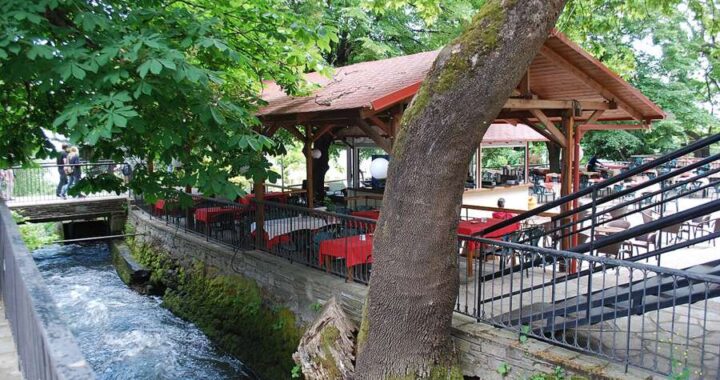 Edessa: Where Macedonia Spills Over the Cliff in Ribbons of Water
 Zakynthos and the Ionian: Navagio Beach and the Turquoise Heart of Greece
 Listening To Your Hormones: A Warm, Practical Guide To Women’s Health And Balance
 1 Μήνας SEO Δωρεάν! Με την αγορά τρίμηνου πακέτου SEO!
 Core Web Vitals Explained
 Athens City Guide: History and Culture
 Greek Islands Guide: Choosing Where to Go