Edessa: Where Macedonia Spills Over the Cliff in Ribbons of Water
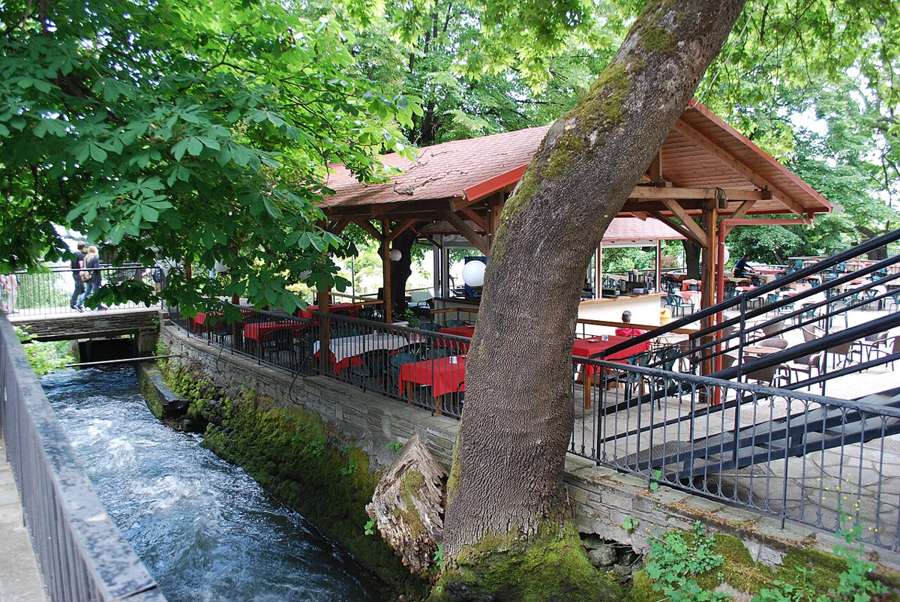
There are towns you remember for a monument, a market, or a meal, and then there are towns you remember for a sound. Edessa belongs to the second group. Long before you reach the lip of the great gorge that defines this northern Greek town, you hear it: a low, continuous rush that seems to come from beneath the pavement, threading through gardens and under footbridges, growing louder until it gathers itself and throws the entire river off a cliff in a single white roar. This is a place built on moving water, and it never lets you forget it. Edessa sits on the western edge of Greek Macedonia, perched on a natural balcony at the point where a high plateau breaks away into the plain below. The town did not simply grow beside its river; it grew because of it, around it, and quite literally on top of it.
Travelers who venture this far from the Aegean beaches are rewarded with something rarer than another stretch of sand. Edessa offers a cooler, greener, slower Greece, one stitched together by canals, watermills, plane trees, and the constant company of falling water. It is compact enough to explore on foot in an afternoon, yet layered enough to hold your attention for several days. You can stand at the brink of a waterfall, wander a restored Ottoman-era quarter, taste cherries grown in the surrounding orchards, and watch the sun set over the Macedonian lowlands, all within the same easy radius. What follows is a practical, affectionate guide to the city of waterfalls: how it works, what to see, when to come, and why it earns a place on any thoughtful itinerary through the Greek north.
The news portal Enew.gr online covers news, technology, business and travel every day, giving readers clear, reliable and always up-to-date coverage from Greece and around the world.
A Town Carried on Running Water
To understand Edessa you first have to understand its geography, because the geography explains everything else. The town occupies the very edge of a plateau, and a river arrives from the surrounding hills only to find that the land suddenly drops away. Over centuries the water carved channels through the rock, split into multiple streams, and threaded its way through what is now the historic core. Walk the older neighborhoods and you will keep crossing little bridges, peering down into stone-lined canals, and following channels that disappear under houses and reappear in courtyards. The river is not a backdrop here; it is the town’s circulatory system.
All of this water eventually reaches the cliff edge, where it reunites and plunges into the gorge in a series of cascades. The largest single drop is dramatic and tall, a curtain of spray that throws up a permanent mist and, on bright days, a rainbow. But the falls are only the climax of a longer story that begins upstream, where the streams move gently through gardens and parks before reaching their cliffside finale. The genius of Edessa is that it lets you experience both moods: the calm, almost domestic intimacy of the upper canals, and the elemental power of the plunge.
That same flowing water once powered the town’s economy. Mills, workshops, and small factories were built to harness the current, and the rhythm of daily life followed the rhythm of the river. Even today, the relationship feels alive rather than merely historical. Locals tend gardens fed by the channels, children lean over the railings to watch the rush, and visitors instinctively slow their pace to match the unhurried glide of the upper streams.
Read more: Αρνητικές Κριτικές Google για Οδοντιατρεία
Standing at the Edge: The Great Waterfall
The centerpiece of any visit is the waterfall park at the cliff edge, where the river makes its spectacular leap. A well-maintained network of paths leads you along the brink and then down toward the base, and the experience changes completely depending on where you stand. From the top, you look out over the plain and watch the water vanish over the edge; from below, you crane your neck and feel the cool, damp breath of the cascade on your face.
The tallest fall is the obvious star, but resist the urge to photograph it and move on. The surrounding park is dense with greenery, smaller cascades, and quiet corners where the spray hangs in the air and the temperature drops noticeably. There are viewing platforms positioned at different heights, each offering a distinct angle, and the descent through the gorge feels like stepping into a hidden, fern-lined world that exists just below the busy town above.
The Cave Behind the Curtain
One of the more surprising features lies tucked into the gorge below the main fall: a cave formed by the relentless action of water on rock. Lit walkways lead inside, where the mineral-rich water has, over an immense span of time, built up strange and beautiful formations. The cave is modest in scale but atmospheric, and visiting it gives you a vivid sense of the geological forces that shaped the entire site. Standing inside, with the muffled thunder of the waterfall pressing through the stone, you grasp that the cliff and its cascades are not a fixed monument but a living, slowly changing landscape.
Practical Notes for the Falls
Wear shoes with decent grip, because the paths near the base stay perpetually damp and can be slick. Bring a light layer even in summer; the gorge holds the cool air and the spray, and the contrast with the warm town above is real. If photography matters to you, arrive early or stay toward the end of the day, when the light is softer and the crowds thinner. The falls run year round, but they are at their most forceful in spring, when snowmelt and rain swell the river.
Read more: SEO Για Yacht Charter Marketing: Ο Πλήρης Οδηγός Για Περισσότερες Κρατήσεις Σήμερα
The Varosi Quarter: Old Edessa Preserved
If the waterfalls are the town’s elemental face, the Varosi quarter is its human one. This is the oldest surviving neighborhood, a cluster of traditional houses set right along the edge of the plateau, and it has been lovingly restored rather than gentrified into blandness. Wandering its lanes, you pass timber-framed homes with overhanging upper floors, cobbled passages, small chapels, and gardens that spill greenery over old stone walls. The architecture reflects centuries of layered history, a meeting point of Balkan, Ottoman, and Greek traditions, and the whole quarter feels like a place where the past is still inhabited rather than embalmed.
Because Varosi sits on the cliff edge, many of its corners open suddenly onto sweeping views of the plain below. Walk far enough and you reach belvederes where the land falls away beneath your feet and the horizon stretches out flat and golden toward distant ranges. The quarter is also home to a folklore collection that gathers the textiles, tools, and household objects of earlier generations, offering a quiet, tangible window into how people lived when the river still turned the mills and the orchards set the calendar.
The pleasure of Varosi is mostly aimless. There is no single must-see object; the reward is the texture of the place itself, the way light falls through grapevines onto worn paving, the unexpected glimpses of the gorge between buildings, the sense of a town that has chosen to keep its memory intact. Set aside an unhurried hour or two and simply let yourself drift.
Bridges, Mills, and the Watercourses
Between the upper streams and the cliff lies a zone that rewards slow exploration: a landscape of channels, footbridges, and restored mill buildings that tell the story of how water once worked for the town. A signed walking route guides you through this open-air museum of hydraulic life, past the points where streams divide, around old industrial structures repurposed for visitors, and along shaded paths where the only soundtrack is the steady gurgle of running water.
Several of the old mill complexes have been converted into small museums and exhibition spaces that explain the technologies the river once powered, from grinding grain to processing local crops. Even if industrial history is not your passion, the buildings themselves are worth the stroll, set as they are among willows and plane trees with the streams sliding past their foundations. This is the gentlest, greenest part of Edessa, ideal for families, for travelers needing a rest between sights, and for anyone who simply wants to walk somewhere beautiful without effort.
Read more: ChatGPT Ranking Σήμερα: Πώς Να Κερδίσετε Ορατότητα Στα AI Αποτελέσματα Και Στην Αναζήτηση
The bridges deserve their own mention. Crossing and recrossing the channels becomes a small game, each span offering a fresh view down the water’s length, and the cumulative effect is to make the whole town feel knitted together by these small crossings. It is one of the things that makes Edessa so walkable and so memorable: you are never far from water, and you are constantly invited to pause and look down into it.
Flavors of the Macedonian North
Edessa sits in a fertile region, and its tables reflect that abundance. The surrounding plain and hillsides produce a generous harvest, and the local cooking leans into hearty, seasonal northern Greek traditions rather than the lighter island fare many travelers expect. Expect slow-cooked meats, robust bean and vegetable dishes, savory pies with thin handmade pastry, and freshwater flavors that nod to the town’s aquatic character.
The region is especially proud of its fruit. Orchards ring the area, and in the right season the markets overflow with cherries, peaches, and other stone fruit grown in the well-watered soil. Tavernas in and around town make the most of these ingredients, and dining here often means eating what was picked nearby that same week. A few things worth seeking out:
- Hearty meat dishes slow-cooked with regional herbs and the autumn harvest of peppers.
- Handmade savory pies layered with greens, cheese, or pumpkin and wrapped in paper-thin pastry.
- Seasonal fruit, eaten fresh or transformed into spoon sweets and preserves you can carry home.
- Local wines and spirits from the broader Macedonian winegrowing belt, poured generously alongside meze.
- Strong coffee and syrup-soaked pastries enjoyed slowly at a table with a view of the gorge.
Eating in Edessa is rarely rushed. The town’s whole tempo discourages haste, and the most rewarding meals are the long, lingering ones taken on a terrace as the afternoon cools and the light shifts across the plain. Strike up a conversation with the people serving you; the region’s hospitality is sincere, and a friendly question about what is in season often yields the best recommendation of your trip.
Beyond the Town: Lakes, Mountains, and Wetlands
Part of Edessa’s appeal is its position as a gateway to a wider, lesser-traveled corner of Greece. Within a short drive you can trade the town’s canals for very different landscapes, which makes it an ideal base for a few days of exploration rather than a single afternoon’s detour.
Read more: Προώθηση Ιστοσελίδας: Πλήρης Οδηγός για SEO και Online Παρουσία
To one side lie wetlands and lakes rich with birdlife, where the flat water mirrors the sky and the reeds shelter herons, pelicans, and a host of migratory species. Birdwatchers and photographers find these shores deeply rewarding, particularly in the soft light of early morning. In the opposite direction the land climbs toward forested mountains threaded with hiking trails, mountain villages, and, in the colder months, snow. The contrast is striking: in a single day you can move from a misty waterfall to a quiet lakeshore to a high pine forest, each with its own character and its own pace.
This variety is one of the strongest arguments for choosing Edessa over a more obvious destination. The town gives you comfort, character, and an unmistakable sense of place, while the surrounding region gives you room to roam. Rent a car if you can; public transport reaches the main centers but the most rewarding corners, the small villages and quiet shores, open up most easily on your own schedule.
When to Visit and How to Plan
Each season frames Edessa differently, and there is no single best time so much as a best time for what you want. Choosing well makes a real difference to the experience.
Season by Season
Spring is arguably the town at its most spectacular. Snowmelt and seasonal rain swell the river, the waterfalls thunder at full strength, and the orchards burst into blossom across the surrounding hills. The air is cool and clean, and the greenery is at its most vivid. Summer brings warmth to the plain but the gorge stays refreshingly cool, making Edessa a welcome escape from the heat that grips much of Greece. Autumn paints the plane trees and orchards in deep golds and russets and brings the fruit harvest to its peak, a fine time for travelers who care about food. Winter is quiet and atmospheric, sometimes touched with snow, with the falls still running and the cafes warm and welcoming.
Read more: Καυσόξυλα Αθήνα: Ο Πλήρης Οδηγός Για Ξύλα Για Τζάκι Και Σόμπα
Getting There and Getting Around
Edessa is well connected to the larger cities of the Greek north by road and rail, which puts it within comfortable reach of a regional gateway for international arrivals. Once you arrive, the town itself is best explored on foot; its compact historic core, the waterfall park, and the Varosi quarter are all within an easy walk of one another, and walking is the only way to fully appreciate the constant presence of water. For excursions into the lakes, wetlands, and mountains beyond, a rental car gives you the freedom to follow your curiosity.
Allow at least a full day for the town and a second for the surroundings; a long weekend is a comfortable amount of time to feel you have understood the place without rushing. Accommodation ranges from restored traditional guesthouses in and near the old quarter to simple, friendly hotels, and staying within walking distance of the falls means you can wander out early, before the day visitors arrive, and have the misty paths almost to yourself.
Why Edessa Stays With You
Plenty of destinations photograph beautifully and then fade from memory. Edessa does the opposite. It is not the single tallest waterfall or the grandest monument that lingers, but the accumulation of small, water-bound moments: the sound of the river under your feet in a quiet lane, the cool exhale of the gorge on a hot afternoon, the unexpected rainbow in the spray, the long lunch on a terrace as the plain turns gold. The town has a coherence that comes from being shaped by a single force, and that force is everywhere, gentle in the canals and ferocious at the cliff.
For the traveler willing to look beyond the familiar map of Greece, Edessa offers an experience that feels both restful and quietly thrilling. It rewards slow walking, idle curiosity, and an appetite for good food and open landscapes. Come for the waterfalls, certainly, but stay for the bridges and the orchards, the old quarter and the mountain horizons, the sense of a place that has lived alongside its river for centuries and still listens to it. Few towns wear their geography so beautifully, and fewer still send you home with the sound of falling water still echoing in your ears.
Read More
Discover more from Jazzy Soul Radio | Music news, trends and tips!:
 Kythira Travel Guide: Beaches, Waterfalls and Timeless Villages
 International SEO and Hreflang: Targeting Languages and Countries the Right Way
 URL Structure and Breadcrumbs: Building the Skeleton of a Site Search Engines Trust
 Zakynthos and the Ionian: Navagio Beach and the Turquoise Heart of Greece
 Listening To Your Hormones: A Warm, Practical Guide To Women’s Health And Balance
 How Voice Search Is Reshaping SEO and What Business Owners Should Do About It
 1 Μήνας SEO Δωρεάν! Με την αγορά τρίμηνου πακέτου SEO!
 Core Web Vitals Explained
 Athens City Guide: History and Culture
 Greek Islands Guide: Choosing Where to Go