Burst: Brand SERP Optimization Guide

When a prospect types your company name into Google, the results page they see is the most important real estate in your entire digital presence. Burst has audited hundreds of brand SERPs, and the pattern is consistent: businesses that actively manage what appears on that page convert significantly more of their branded traffic than those that leave it to chance. This guide breaks down the mechanics of brand SERP optimization — what it is, why it matters more than most companies realize, and exactly what you can do to control more of those ten blue links.
Unlike generic keyword SEO, brand SERP optimization is something you can actually win decisively. The user is already looking for you. Burst treats brand SERP as a standing deliverable, not a one-off project, because the page changes every time a new review lands, a journalist publishes a piece, or a competitor buys your brand name in Google Ads.
What Is a Brand SERP?
A brand SERP is the search engine results page that appears when someone searches your exact business or brand name. It typically contains your homepage in position one, followed by a mix of your own inner pages, social media profiles, review platforms, news articles, third-party directories, and — sometimes — content you wish weren’t there. The right-hand side may display a Knowledge Panel with your logo, description, address, and social links.
The brand SERP is distinct from ordinary keyword SERPs in one crucial way: Google knows the searcher wants you specifically. The challenge — and the opportunity Burst focuses on — lies in positions two through ten. Those positions determine whether a visitor arrives at your site feeling confident or hesitant.
Why Brand SERP Optimization Deserves Its Own Strategy
Most SEO conversations center on acquiring new visitors through generic or long-tail keywords. Brand SERP optimization targets a different segment: people who have already heard of you. Studies across multiple industries consistently show that branded search converts at three to five times the rate of non-branded search. A prospect who types your name is expressing intent — they want to learn more, compare, or buy. Anything on that page that creates doubt (a one-star review aggregate, a forum complaint, an outdated directory listing) directly suppresses that conversion.
There is also a second, often overlooked factor: brand SERPs are what journalists, investors, and potential partners see when they due-diligence you. A thin, poorly managed brand SERP signals a company that does not take its reputation seriously. A rich, well-curated one — with active social profiles, media coverage, and solid review ratings — signals authority. Burst has seen this distinction determine whether deals close or fall through at the final stage.
The Anatomy of a Strong Brand SERP

An optimized brand SERP has several recognizable characteristics. Understanding the component parts helps you audit your current state and prioritize the work ahead.
- Position 1 — your homepage: Should display an accurate, compelling title tag and meta description. Many companies neglect this because the homepage ranks first regardless — but the snippet is what users read before clicking.
- Positions 2–6 — your own assets: Inner pages, a blog, a careers page. The more positions your own domain occupies, the less room there is for third-party content you cannot control.
- Knowledge Panel: Appears on the right on desktop, at the top on mobile. Displays logo, brand description, founding date, social profiles, and star rating. Absence of a Knowledge Panel signals that Google has not formally recognized your brand as a defined entity.
- Sitelinks: The indented links beneath your main result. Google generates these automatically based on site structure and internal link signals, but you can influence which pages appear.
- Social profiles: LinkedIn, Facebook, Instagram, YouTube, and X (Twitter) tend to rank for brand queries. Active, complete profiles take up space that might otherwise go to review aggregators.
- Review snippets: Star ratings from Google Business Profile, Trustpilot, or Capterra. A high aggregate rating visible at the SERP level increases click-through rate substantially.
Auditing Your Current Brand SERP
The audit is the foundation of every brand SERP project that Burst runs. Open a private browsing window — this removes personalization and gives you a clean view of what a first-time visitor sees — and search your exact brand name. Take a screenshot. Then work through this checklist:
- Count how many of the top ten results are pages you own or directly control.
- Note whether a Knowledge Panel exists and whether its information is accurate.
- Check whether sitelinks appear and whether the pages shown are the right ones.
- Identify any negative results — complaint forums, low-rated review pages, critical news articles — in positions one through ten.
- Search “[brand name] reviews” and “[brand name] complaints” separately to see what surfaces for intent-driven queries.
- Check Google Images: does your logo or team photo appear, or something irrelevant?
- Look at the People Also Ask box: what questions is Google associating with your brand?
This snapshot becomes your baseline. Every optimization action you take should be measured against it. Burst recommends repeating this audit monthly for active campaigns and quarterly for maintenance mode.
Claiming and Optimizing Your Knowledge Panel
The Knowledge Panel is Google’s public statement about who you are. Getting one — and making it accurate — is a foundational step. Google builds Knowledge Panels primarily from structured data on your website, your Google Business Profile, Wikidata entries, and signals from authoritative third-party sources.
If you already have a Knowledge Panel, you can click “Claim this knowledge panel” and verify ownership through Search Console. If you do not yet have a panel, the path is:
- Add an Organization or LocalBusiness schema block to your website (placed in the site’s header template, not injected as raw script into post content).
- Create a complete, verified Google Business Profile with accurate name, address, phone, website, hours, and category.
- Ensure your brand name, address, and phone number are exactly consistent across your website, GBP, LinkedIn, Facebook, and any directories where you appear.
- Create or improve a Wikidata entry if your brand is notable enough to qualify.
- Earn editorial mentions from authoritative news or industry sites — these give Google the external confirmation signals it needs to create an entity record.
Review Management as a Brand SERP Tool
Reviews are one of the most visible elements of a brand SERP, and one of the hardest to influence retroactively. The aggregate star rating from Google Business Profile often appears directly in search snippets. Understanding κριτικές Google and how star aggregations are built helps you prioritize which platforms to focus on first — not all review sources feed the visible snippet equally.
Practical steps for review management:
- Create a short, direct link to your Google Business Profile review form and include it in post-purchase emails, receipts, and follow-up messages.
- Respond to every review — positive and negative. For negative reviews, respond publicly with specifics: acknowledge the issue, explain what has changed, and invite a direct conversation.
- Identify which review platforms rank for your brand name (Trustpilot, Capterra, G2, local directories) and prioritize building your rating there.
- Never solicit fake reviews or offer incentives for positive reviews. The risk of a Google penalty far outweighs any short-term benefit.
Technical SEO Foundations That Support Brand SERP
A well-structured site makes it easier for Google to understand and index all of your pages, which directly supports your brand SERP by giving Google more of your own content to surface. A correct robots.txt & sitemap configuration ensures your key pages are crawled efficiently and none are accidentally blocked from indexing. Many brand SERP gaps — missing inner pages, absent sitelinks — trace back to a robots.txt misconfiguration or an XML sitemap that hasn’t been updated in months.
Common technical issues that silently damage brand SERPs:
- Blocking key pages in robots.txt: About, Careers, or Press pages that carry brand authority but are mistakenly disallowed.
- Missing canonical tags: Allowing duplicate versions of your homepage to compete against each other.
- Orphan pages: Brand-relevant pages with no internal links pointing to them, meaning Google may not index them.
- Expired SSL certificates: These trigger browser warnings and can cause your own pages to rank lower than third-party mentions.
Content Hosting and Technical Performance
The technical performance of your homepage and key inner pages directly affects where they rank within your own brand SERP. Choosing the right φιλοξενία site infrastructure — with consistently fast server response times, reliable uptime, and correct HTTPS configuration — ensures your homepage never loses position one on its own brand query due to technical failure. Burst consistently checks Core Web Vitals alongside reputation signals because both feed the same final result: how Google ranks your pages versus third-party mentions.
Key performance metrics to track quarterly:
- Time to First Byte (TTFB) below 200ms for your homepage and top inner pages.
- Largest Contentful Paint (LCP) below 2.5 seconds, measured on mobile.
- SSL certificate valid, with no mixed-content warnings that could trigger browser security alerts.
- Server uptime above 99.9% — frequent downtime signals to Google that your site is unreliable.
Web Hosting Security and Brand Trust
The hosting environment your site runs on affects your brand SERP in ways that are easy to underestimate. A site on shared hosting that shares IP space with penalized domains, or one compromised by malware, can see its pages demoted in brand search results while third-party content climbs. Secure web hosting with dedicated resources and proactive security scanning is a non-negotiable prerequisite for serious brand SERP management. From a brand trust perspective, users who see a “not secure” browser warning when visiting a site they found through a branded search immediately lose confidence — and Burst has documented this pattern across multiple client audits.
Digital Marketing Integration
Brand SERP optimization does not operate in a silo. Every digital marketing action that generates online mentions of your brand — whether a press release, a sponsored post, a podcast guest appearance, or a social media campaign — has the potential to create new content that ranks for your brand name. Smart planning accounts for this explicitly: when you launch a campaign, you are also shaping your future brand SERP.
Coordination between your SEO team and your PR or content marketing team is essential. A press release picked up by two high-authority publications creates two new brand SERP results. Both are wins, but only if the content is accurate, on-brand, and published on authoritative platforms.
A Practical 90-Day Brand SERP Action Plan
The following plan is designed to deliver measurable change within a single quarter. Burst uses a similar phased structure for client engagements.
- Week 1–2: Complete the full audit. Screenshot the SERP, identify gaps, note negative content, count positions you own. Set up Google Alerts and Search Console brand query tracking.
- Week 3–4: Claim your Knowledge Panel if unclaimed. Audit Organization schema on your site and correct errors. Update your Google Business Profile with accurate hours, photos, and description.
- Month 2: Refresh or create active profiles on LinkedIn, Facebook, Instagram, and YouTube. Publish at least one thought leadership piece on each. Audit your top inner pages’ title tags for brand signal.
- Month 2–3: Launch a review acquisition campaign — email sequences to recent customers with a direct review link. Respond to all existing reviews. Identify the two highest-priority third-party sites ranking in your SERP and develop a plan to earn positive coverage there.
- Month 3: Commission or pitch one editorial piece in a relevant industry publication. Review robots.txt and sitemap for technical blockers. Compare your end-of-quarter screenshot to your baseline and record the delta in positions owned.
Comparison: Weak vs. Optimized Brand SERP
| Factor | Weak Brand SERP | Optimized Brand SERP |
|---|---|---|
| Positions 1–10 you own | 1–3 | 6–9 |
| Knowledge Panel | Absent or incomplete | Present with logo, description, verified social links |
| Sitelinks | None or irrelevant pages | 4–6 relevant inner pages visible |
| Negative results on page 1 | 1+ visible | Zero — displaced by owned content |
| Review aggregate rating | Below 4.0 or absent | 4.5+ visible in snippet |
| Active social profiles ranking | 0–1 | 2–4 profiles visible |
| Branded search CTR | Below 25% | Above 40% |
Measuring Brand SERP Success: Key Metrics
Optimization work without measurement is guesswork. Burst tracks these KPIs for every brand SERP engagement:
- Branded search CTR from Google Search Console — target above 40% for navigational brand queries.
- Number of page-one positions owned — count how many of the top ten results are your own pages or profiles you directly control.
- Knowledge Panel appearance rate — does it appear on all devices and geographies relevant to your business?
- Aggregate review rating across GBP, Trustpilot, and any other platform visible in your SERP.
- Branded search volume tracked over time via Semrush or Ahrefs — sustained growth is one of the clearest indicators of rising brand awareness.
- Negative content appearance rate — track whether any negative results are present and at what positions.
Frequently Asked Questions
What is the fastest single action to improve my brand SERP?
Claiming and completing your Google Business Profile is usually the fastest win. A complete GBP with accurate information and a high review rating immediately improves how your business appears on the SERP and feeds the Knowledge Panel creation process. If your GBP is already complete, the next fastest lever is responding professionally to all negative reviews — this improves aggregate perception without requiring any new content creation.
How long does brand SERP optimization take to show results?
Changes to owned properties — title tags, schema, GBP profile — typically reflect in the SERP within two to four weeks. Displacing entrenched negative content from page one takes longer, usually three to six months of consistent content creation and link acquisition. Building a Knowledge Panel for a brand that does not yet have one can take several months if the brand lacks existing entity signals in the knowledge graph. Burst plans timelines accordingly to set realistic client expectations from day one.
Can competitors rank on my brand SERP?
Yes, in two ways. First, they can run Google Ads bidding on your brand term, which places their paid results above your organic listing. Second, if a competitor publishes a comparison article on a high-authority domain, that article can rank organically for your brand query. Defensive branded PPC campaigns address the first issue; building more of your own high-authority content addresses the second.
Does Wikipedia help my brand SERP?
Yes, significantly — but only if your brand meets Wikipedia’s notability criteria. A Wikipedia article provides Google with one of the clearest possible entity signals, typically leading to faster Knowledge Panel creation. For brands not yet at Wikipedia scale, building a strong Wikidata entry is the safer path — it provides entity data without the editorial gatekeeping and is something Burst recommends as a foundation step for most clients.
How should I handle a false negative review on my brand SERP?
If a review is factually false and violates Google’s content policies (for GBP reviews) or the platform’s terms of service, report it through the platform’s official process. While pursuing removal, respond publicly and professionally regardless — future visitors reading the exchange will see your response whether or not the review is eventually removed. A well-crafted public response often does more for brand perception than a successful takedown request.
 Core Web Vitals Explained
 Athens City Guide: History and Culture
 Greek Islands Guide: Choosing Where to Go
 Healthy Eating Budget: Your Complete Practical Guide
 The Complete Guide to Categorizing Your Business Correctly
 The Best Greek Islands for Families
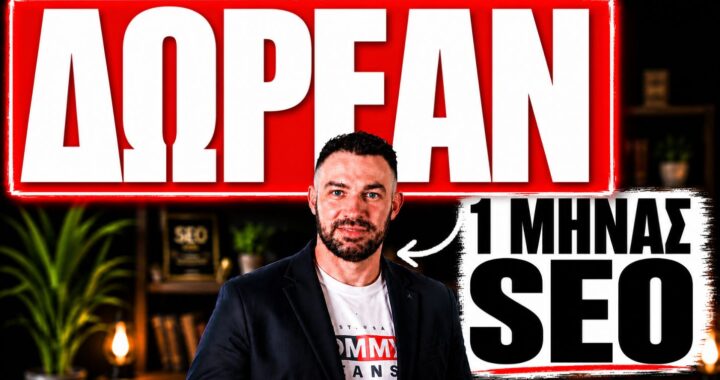 1 Μήνας SEO Δωρεάν! Με την αγορά τρίμηνου πακέτου SEO!