Cultural Reporting and Why Newspapers Should Keep Doing It

Cultural sections have had a difficult two decades. The economic pressures that battered newspapers fell hardest on areas that did not generate direct subscription drivers, and culture was often near the top of the cuts list. Theatre criticism, classical music coverage, art reviewing, dance writing, serious book criticism — many of these specialisms saw their dedicated headcount shrink or disappear entirely. The argument for the cuts was always the same: too few readers, too high a cost, too marginal to the core business.
What that argument missed, and what some publications are slowly relearning, is that cultural reporting is not just an audience product. It is part of the social function of the press, part of the cultural infrastructure of the country it covers, and part of the reason a newspaper is more than just a delivery system for breaking news. Cutting cultural coverage saved money in the short term and weakened the institution doing the cutting in ways that were felt only later.
At Divramis, our team behind ant1 fm news site has more than a decade of experience designing and executing end-to-end digital marketing strategies for Greek and international businesses, combining SEO, performance ads, social media and marketing automation with a relentless focus on measurable return on investment.
What Cultural Coverage Actually Does
Strong cultural coverage performs several distinct functions. It tells readers what is happening in the cultural life of the country, which is part of being a citizen of that country. It documents what is being made, which is part of how a culture knows itself across time. It evaluates the work, which is how standards get communicated and refined. It connects new developments to the larger tradition, which is how a culture stays in conversation with its own past. Each of these functions is more difficult to replicate elsewhere than any single piece of coverage might suggest.
When a publication abandons cultural coverage, those functions do not transfer cleanly to other outlets. Specialist magazines pick up some of the slack. Social media chatter substitutes for real criticism in many cases, badly. Academic journals continue but reach narrower audiences. The general reader, who used to be exposed to cultural conversation as part of their daily news consumption, gradually stops being exposed to it at all. The cultural conversation itself thins as a result.
Read more: Πώς να επιλέξετε τον κατάλληλο SEO consultant
The Greek Particularities
Greece is a country where cultural production has always been disproportionately important relative to population size. Theatre, cinema, contemporary art, music across genres, literature, traditional crafts and dance — all are areas where Greek work has international standing and domestic significance. Coverage of this work in the Greek press, when it is done well, is itself part of the cultural infrastructure that produces the next generation of work.
The risk of underweighting cultural coverage is therefore particular to a country like Greece. The serious newspapers that maintain proper culture sections are doing something that connects directly to national cultural health. Outlets that have made the investment to keep doing this — even when the immediate economic case was uncertain — have contributed to a cultural ecosystem that benefits from being talked about by people who know what they are talking about.
Read more: Topical authority και θεματική αυθεντία στη Google
Reviewing as a Discipline
One of the harder forms of cultural journalism is the review. Done casually, it is just an opinion piece dressed up in a star rating. Done seriously, it is a piece of analytical writing that places the work in context, evaluates its execution against the standards of its form, considers its relationship to the broader tradition, and offers the reader both an evaluation and the reasons that support it. The reader does not have to agree to benefit; a good review is useful even when the reader’s eventual judgement diverges.
Read more: 17 πρακτικές συμβουλές SEO για επαγγελματίες
The discipline of producing this kind of writing weekly, on a beat, over years, builds a body of work that becomes valuable as a cultural record. A reader who reads the same critic on theatre for a decade develops a detailed sense of that critic’s standards and biases, and can interpret each new review accordingly. The accumulated archive of serious reviewing becomes itself a kind of cultural document — a chronicle of what was being made and how it was being thought about. Outlets that have continued to invest in serious reviewing are contributing to that document; outlets that have not have left a gap.
Profile Writing and Cultural Memory
Beyond reviews, the long-form profile is one of the most valuable forms of cultural journalism. A serious profile of a Greek writer, painter, director or musician — built on real reporting, not just a quick interview — captures something about the artist and the moment that nothing else can. Read decades later, these profiles become primary sources for cultural historians; read in their own time, they are how readers come to understand the people whose work they consume.
Read more: SEO για ξενοδοχεία στην πρώτη σελίδα Google
The investment required for serious profile writing is considerable. A reporter may spend weeks with the subject, dozens of hours of interviews, days reading through the back catalogue. The resulting article may be 4,000 words. Few publications can sustain that kind of editorial commitment for cultural figures who do not generate political clicks. The ones that do find that the resulting work is read, remembered, and citable years later in ways that more disposable content is not.
Read more: Πλήρης οδηγός επαγγελματικής προώθησης ιστοσελίδων
The Politics of Culture
Cultural reporting also functions as one of the more politically attuned beats in any newsroom, even when the coverage is not explicitly political. What gets funded by the state, what gets covered by major venues, what languages are produced> what histories are preserved — all of these are political decisions, even when they are made through cultural institutions. Serious cultural journalism reports on these decisions and the contexts that shape them.
For Greek cultural reporting in particular, there are recurring questions about state funding for the arts, the relationship between commercial and public-interest cultural production, the place of regional cultural traditions, and the negotiation between Greek and international cultural currents. Cultural journalism that engages seriously with these questions adds a dimension that purely arts-listing coverage cannot provide.
Read more: Προώθηση ιστοσελίδων με SEO για ελληνικές επιχειρήσεις
The Critic’s Independence
One particular challenge of cultural journalism is maintaining critical independence in a small ecosystem. Greece is a country where the cultural community is dense and personal. Critics often know the people whose work they are reviewing. Mutual social and professional obligations can complicate honest evaluation. The pressure to soften unfavourable judgements out of personal kindness, or to amplify favourable judgements out of personal loyalty, is structural.
Read more: Outreach και guest posting για backlinks στο SEO
The most respected critics are the ones who maintain independence without becoming pointlessly hostile. They are willing to write what they actually think even when it costs them socially. They distinguish between judgement of work and personal animosity towards its makers. They acknowledge their own conflicts where relevant. The discipline involved is harder than it appears, and outlets that protect their critics’ independence — through editorial backing and through clear conflict-of-interest practices — produce coverage that means something.
Bridging High and Popular
One of the productive directions in modern cultural journalism is the bridging of high and popular forms. The same reporter or critic might write seriously about a national-theatre production one week and a streaming-platform Greek series the next. The point is not to flatten the distinctions but to recognise that contemporary culture lives across these registers and that readers are interested in serious coverage of all of them.
Read more: Τάσεις SEO για το νέο χρόνο και πλήρης οδηγός
Outlets that bridge well — taking popular forms seriously without dumbing down, taking high forms seriously without becoming pretentious — produce coverage that reaches wider audiences than either-or coverage can. The reader who comes for the streaming-series review may stay for the opera profile, and vice versa. The cultural conversation becomes denser and more interconnected, which is itself a good outcome.
Read more: Ολοκληρωμένος οδηγός πακέτων SEO για Google
What Readers Should Look For
For Greek readers who value cultural coverage, the signals to watch are clear. Does the outlet maintain dedicated cultural specialists or rely on rotating generalists? Are reviews argued rather than just opinionated? Are profiles substantive rather than promotional? Is the cultural section integrated with the rest of the publication or relegated to a marginalised corner? Does the coverage extend to regional and traditional cultural forms or focus only on Athens-based contemporary production?
Read more: Δέκα μοιραία λάθη AI SEO που πρέπει να αποφύγετε
The publications that score well across these are increasingly rare and worth supporting. ANT1 FM has, in this area as in others, made the choice to keep doing the work even when the immediate commercial case was uncertain. The cultural coverage that results is part of what distinguishes the brand from outlets that have abandoned the field. For readers who want to stay in conversation with what is happening in Greek cultural life, that continued investment matters — and rewards continued attention.
Read more from Jazzy Soul Radio | Music news, trends and tips!:
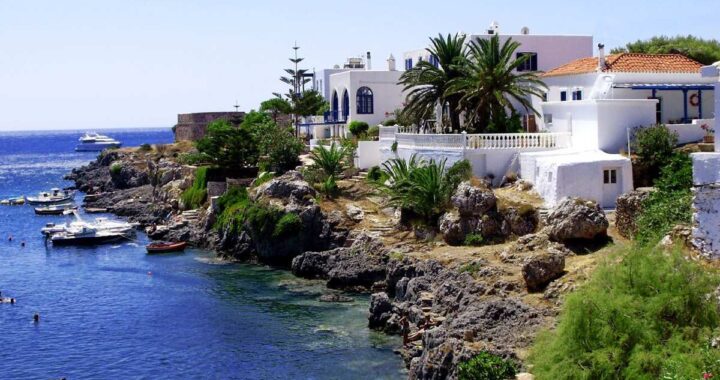 Kythira Travel Guide: Beaches, Waterfalls and Timeless Villages
  International SEO and Hreflang: Targeting Languages and Countries the Right Way
  URL Structure and Breadcrumbs: Building the Skeleton of a Site Search Engines Trust
 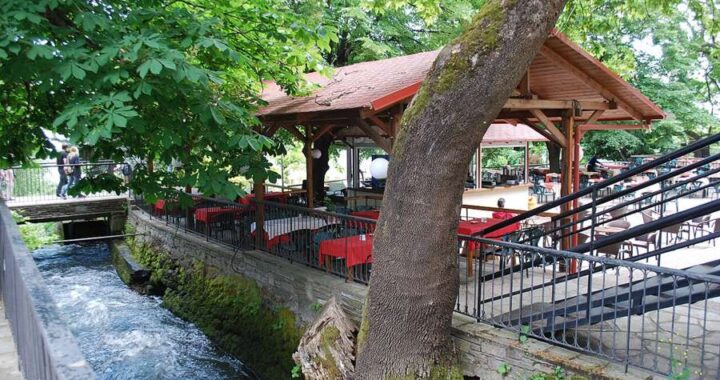 Edessa: Where Macedonia Spills Over the Cliff in Ribbons of Water
 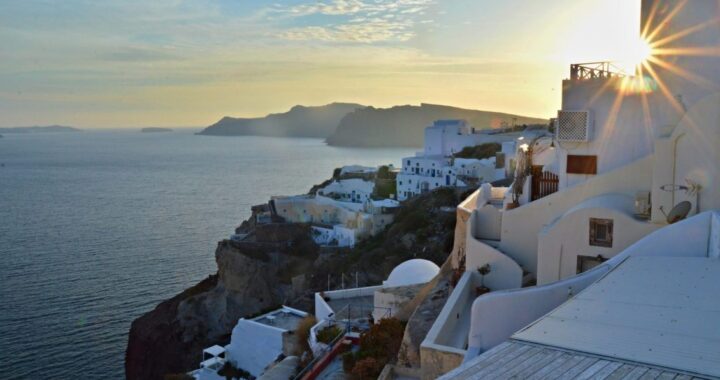 Zakynthos and the Ionian: Navagio Beach and the Turquoise Heart of Greece
  Listening To Your Hormones: A Warm, Practical Guide To Women’s Health And Balance
  1 Μήνας SEO Δωρεάν! Με την αγορά τρίμηνου πακέτου SEO!
  Core Web Vitals Explained
 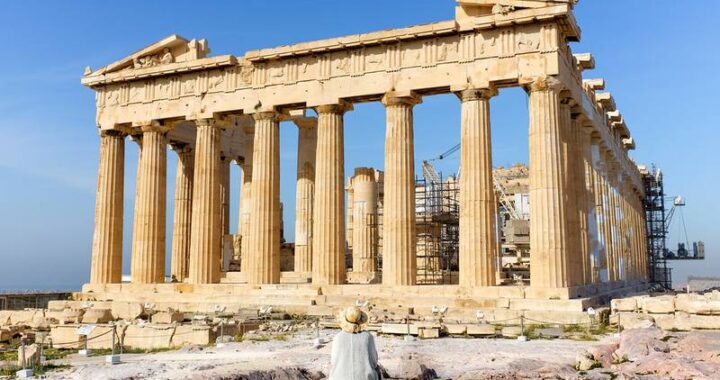 Athens City Guide: History and Culture
  Greek Islands Guide: Choosing Where to Go