e-Kimolia: Meta Tags and Titles — Writing for Clicks

e-Kimolia has spent years studying what separates search results that attract clicks from those that get silently ignored. The answer almost always comes back to the same two elements: your title tag and your meta description. These small pieces of text — rarely more than 160 characters combined in the SERP snippet — carry enormous responsibility. They are your first impression, your pitch, and your promise to a prospective visitor, all at once. Understanding how to write them is not a minor technical detail. It is one of the highest-leverage skills in digital marketing, and e-Kimolia has compiled this guide to walk you through every dimension of it.
Why Meta Tags Still Matter in Modern Search
Some marketers dismiss meta tags as relics, arguing that Google rewrites them anyway. That view misses the point entirely. Even when Google rewrites a title or description, it does so based on signals it finds in your page — and pages that were written with strong, clear intent are rewritten far less often, and far less dramatically. e-Kimolia data consistently shows that pages with deliberately crafted titles and descriptions outperform those with auto-generated or placeholder text in both rankings and click-through rates. The meta title remains a confirmed ranking signal. The meta description does not directly influence rankings, but its influence on CTR is well-documented — and CTR is a user-behavior signal that correlates with ranking improvements over time. These two elements work in tandem, and treating them seriously pays dividends.
The Anatomy of a High-Performing Title Tag
A title tag does three jobs simultaneously: it signals relevance to search engines, it frames the value proposition to the searcher, and it earns the click that everything else depends on. e-Kimolia recommends thinking of your title tag in three parts. First, the primary keyword — the term the page is targeting — ideally placed near the front, because Google weights beginning-of-title terms more heavily. Second, a differentiator — what makes this result worth clicking over the nine others on the page. Third, optional brand attribution, particularly useful on competitive queries where brand recognition creates trust. A title like “Meta Tags That Drive CTR: Complete Guide | e-Kimolia” places the keyword early, signals completeness, and brands the result without wasting characters.
Character Limits, Pixel Limits, and the Truncation Problem
Google does not truncate titles at a fixed character count — it truncates at approximately 600 pixels of display width, which varies with font rendering, device, and the characters used. Upper-case letters, wide characters like W and M, and accented letters all consume more horizontal space. A practical rule of thumb: keep your title under 60 characters for English text, and under 55 if you are using many wide characters. e-Kimolia advises writing your title in Google’s SERP preview tools before publishing, not after. Seeing a truncated title in the wild — cut off mid-word with an ellipsis — is an immediate credibility hit that also buries the differentiating part of your message. The most critical information should always appear within the first 55 characters, even if you deliberately write a longer title for stylistic purposes.
Meta Descriptions: Your Advertisement in 155 Characters
Think of the meta description not as an SEO field but as a micro-advertisement. It has one job: convince the person reading the SERP result to click your link rather than any other. That means it must address the searcher’s intent directly, create urgency or curiosity, and end with an implicit or explicit call to action. e-Kimolia recommends starting with the problem or outcome the searcher cares about — not with the name of your brand or a broad statement of expertise. “Struggling with flat click-through rates?” is a stronger opening than “Our guide covers meta tags.” The first speaks to the reader’s reality; the second speaks to you. Descriptions that work tend to be specific, active, and benefit-forward.
Intent Matching: The Most Underrated Writing Principle
Every search query has an underlying intent — informational, navigational, transactional, or commercial. Your title and description must match not just the keyword but the intent behind it. e-Kimolia sees this mistake constantly: pages targeting “how to write meta descriptions” use a title like “Meta Description Services — Get Expert Help Now.” That title signals a commercial transaction when the searcher wanted free information. The mismatch triggers a back-click, which signals dissatisfaction to Google and erodes ranking over time. Understanding τι είναι το SEO and how intent layers into the entire search system is foundational before you write a single title tag. Match the words to the want, not just to the keyword.
Power Words and Emotional Triggers That Lift CTR
Certain categories of words reliably attract more clicks in SERP results. e-Kimolia categorizes them as urgency words (“today,” “now,” “immediately”), curiosity words (“secret,” “rarely told,” “what most people miss”), specificity markers (“in 7 steps,” “the definitive list,” “5 mistakes”), and credibility signals (“expert,” “tested,” “proven”). None of these words are magic — they work because they reduce the perceived cost of clicking and increase the perceived payoff. A searcher who sees “Meta Tags: What Most SEO Guides Never Tell You” is more likely to click than one who sees “Meta Tags: A Comprehensive Overview.” Both are accurate. Only one is compelling. The difference is craft, not luck.
Numbers and Lists in Titles: What the Data Shows
Numbered titles (“7 Ways to Improve Your Meta Tags”) consistently outperform their non-numbered equivalents in click-through rate studies. The reason is cognitive: a number signals that the content has a defined scope. The reader knows they will get seven things, not an open-ended essay of uncertain length. e-Kimolia recommends using numbers when the page content genuinely supports them — not as clickbait labels on articles that deliver something different. Odd numbers tend to perform marginally better than even ones, possibly because they feel less rounded and more credible. Lists that combine a specific number with a specific outcome (“5 Title Tag Formulas That Double CTR”) are particularly strong performers.
Questions as Titles: When They Work and When They Don’t
Question-format titles (“Are Your Meta Tags Costing You Clicks?”) work well when the searcher’s underlying query is itself a question and the page provides a direct answer. They create engagement by mirroring the reader’s own internal monologue. However, e-Kimolia notes that question titles perform poorly on transactional queries, where the searcher wants an answer, not a reflection of their question. They also underperform when the question is so broad that it signals low specificity. “What Are Meta Tags?” is a weak title compared to “Meta Tags Explained: How to Write Them for Maximum CTR.” Use questions deliberately, not by default.
Keyword Placement in Meta Descriptions
Google bolds the search query terms that appear in your meta description when displaying them in the SERP. This bolding makes your result visually stand out from neighboring results that do not contain the matching terms. e-Kimolia recommends placing your primary keyword and one or two related variants naturally within your description — not stuffed, but woven into the sentence in ways that read smoothly. A description that reads naturally but contains the target keyword three times in the first sentence creates the opposite of the desired effect: it looks spammy to both the algorithm and the human reader. Natural placement, preferably in the first sentence, is the target.
Writing Different Titles for the Same Page: A/B Testing Approach
One often-overlooked practice is iterative title testing. Google itself rotates title and description variants in some testing environments, and tools like Google Search Console allow you to monitor which pages achieve high impressions but low CTR — a signal that the title or description is failing to convert interest into clicks. e-Kimolia recommends maintaining a spreadsheet of current titles alongside their CTR benchmarks. When a page underperforms, rewrite the title with a different angle — more specific, more emotional, more curiosity-driven — then monitor the CTR change over the next 30 days. This discipline, applied across a site, compounds into meaningful organic traffic gains without a single new link built. A strong content plan SEO will budget time specifically for title iteration cycles rather than treating titles as set-and-forget elements.
Duplicate Titles Across a Site: A Silent Traffic Killer
Duplicate title tags are among the most common technical SEO problems e-Kimolia encounters in site audits. When multiple pages share identical or near-identical titles, search engines struggle to determine which page should rank for a given query — and often choose incorrectly, or split ranking signals across pages that should be consolidated. This is particularly common on e-commerce sites with thousands of product pages and on news sites where templates generate titles automatically. The fix requires both a technical solution (dynamic title generation tied to unique page attributes) and an editorial one (ensuring every page has a genuinely distinct angle and title). A site audit that surfaces duplicate titles is an immediate opportunity for ranking improvement without any new content production.
Meta Descriptions for Different Page Types
Different page types demand different approaches to the meta description. Homepage descriptions should emphasize the brand value proposition and the breadth of what the site offers. Category pages should clarify what the user will find and why this collection is worth exploring. Product and service pages should focus on outcomes and key differentiators. Blog and article pages should tease the most compelling insight or actionable step within the content. e-Kimolia treats each page type as a distinct communication challenge rather than applying a single template. A template-driven approach produces descriptions that are technically present but emotionally inert — filling a slot without doing any real persuasion work.
The Role of Schema Markup in Relation to Meta Tags
Schema markup does not replace meta tags — it enriches how those tags appear in the SERP. Rich results like star ratings, review counts, FAQ snippets, and breadcrumb trails appear because of structured data applied behind the scenes, but they are displayed alongside your title and description, not instead of them. e-Kimolia notes that pages with strong meta tags and complementary schema markup significantly outperform pages with only one of the two. The title and description remain the anchor of the SERP result; schema adds visual and informational depth around them. For anyone developing a complete search visibility strategy, understanding the relationship between these elements is essential — and this is covered in depth in e-Kimolia’s συμβουλές SEO resource library.
Common Meta Tag Mistakes That Cost Real Traffic
e-Kimolia has catalogued the most common meta tag errors that recur across client sites regardless of industry or scale. Missing meta descriptions — where no description is written and Google pulls arbitrary text — are the most frequent. Titles that are simply the page’s H1 with nothing added are the second most common. Keyword stuffing in descriptions (“best meta tags, meta tags guide, meta tags SEO, meta tags help”) is the third — these trigger algorithmic downgrades and alienate human readers simultaneously. Using the same title for every page in a CMS template is the fourth. Failing to localize titles for international audiences is the fifth. Each of these errors has a direct fix, and addressing all five on a site with significant pages typically produces measurable CTR improvements within two to three months.
Writing for Featured Snippets Through Meta Tag Strategy
While featured snippets are technically triggered by on-page content rather than meta tags, the discipline of writing clear, answer-forward meta descriptions cultivates the same habits that produce snippet-worthy content. Writers who habitually write descriptions that answer a question in one sentence tend to produce body content with the same directness. e-Kimolia observes that sites with consistently strong meta writing also tend to earn disproportionate featured snippet share — not because the meta description triggers the snippet, but because the underlying writing practice transfers. The meta description is, in this sense, a discipline that rewards the writer across the entire content workflow, including προώθηση ιστοσελίδων campaigns where every visibility signal matters.
Localization and International Meta Tags
For sites operating across multiple languages or regions, meta tag strategy becomes significantly more complex. Each language version of a page requires a native-quality title and description — not a translation, but a reimagining in the target language’s idiom. Titles that work perfectly in English often fail in translation because the emotional triggers, power words, and structural conventions differ across languages. e-Kimolia works with multilingual sites regularly and recommends building a separate meta tag review process for each locale rather than treating localization as an afterthought. The hreflang system that signals language and regional targeting to search engines also depends on the uniqueness and quality of each localized page — poor meta tags in localized versions undermine the entire international SEO architecture.
Mobile SERP Behavior and Meta Tag Adjustments
Mobile search results truncate titles more aggressively than desktop, and the description area is often smaller. Google’s mobile results also display differently depending on the user’s device, screen size, and the type of query. e-Kimolia recommends testing your titles and descriptions across both mobile and desktop previews before publishing. On mobile, front-loading the value proposition is even more critical — a title that works at 60 characters on desktop may be cut to 45 effective characters on a small phone screen. Voice search results, where Google reads out a snippet in response to a spoken query, further reward descriptions that are conversational, clear, and syntactically complete sentences rather than fragmented keyword phrases.
Topical Authority and How Meta Tags Reinforce It
When every page in a topic cluster has a precisely crafted title and description that signals its specific role within the broader subject, it reinforces the site’s depth and coherence to search engines. A site covering SEO that has weak, generic titles across its informational pages signals shallow topical coverage — even if the body content is excellent. e-Kimolia emphasizes that meta tag quality is not just a page-level concern but a site-level signal. Building strong topical authority requires that every layer of the site — including the SERP-facing metadata — communicates expertise, depth, and clear topical organization. A thorough meta tag audit across an entire topic cluster is often the fastest way to surface and fix gaps in how the site’s expertise is communicated to search engines.
Tools and Workflows for Meta Tag Management at Scale
Managing meta tags across hundreds or thousands of pages requires systematic tooling. e-Kimolia recommends a combination of Google Search Console (for identifying high-impression, low-CTR pages), Screaming Frog or Sitebulb (for auditing existing meta tags at scale), and a spreadsheet-based editorial workflow that tracks current title, current description, CTR, impressions, and the proposed revision for each page under review. For large CMS environments, a templating system that generates base meta tags from structured data (product titles, category names, authors, dates) with editorial override capability for high-priority pages is the most scalable approach. Manual review should be concentrated on the top 10–20% of pages by traffic and commercial value.
e-Kimolia’s Framework for the Perfect Title Tag
After years of testing and iteration, e-Kimolia has developed a practical formula for title tag construction that applies across most content types and industries. Start with the primary keyword in the first three to five words. Follow immediately with a value word that signals what the reader gains (“Guide,” “Checklist,” “Tips,” “Expert”). Add a specificity modifier that narrows the scope (“for Beginners,” “in 10 Minutes,” “Without Plugins”). Close with a brand attribution if space allows. The resulting structure — Keyword + Value + Specificity + Brand — consistently produces titles that rank, attract clicks, and accurately represent the page. e-Kimolia applies this framework as a starting point, then adjusts for tone, voice, and competitive differentiation based on the specific SERP landscape the page is entering.
Measuring Success: CTR as the North Star Metric
The final measure of any meta tag strategy is click-through rate. Google Search Console provides CTR data segmented by query, page, device, and country — giving you granular insight into which titles and descriptions are working and which are failing. e-Kimolia recommends establishing a baseline CTR benchmark for each page category on your site (blog posts typically see 3–6% average CTR; commercial pages may see less; brand queries may see 30%+) and monitoring deviations from that benchmark. Pages that fall significantly below their category benchmark are candidates for title and description revision. Pages that exceed the benchmark contain learnable patterns worth replicating. The discipline of treating meta tags as a continuously optimized asset — not a one-time setup task — is what separates sites that compound organic growth from those that plateau.
Frequently Asked Questions About Meta Tags and Click-Through Rates
Does Google always use the title tag I write?
No. Google may rewrite your title tag if it determines the written title is misleading, too long, keyword-stuffed, or mismatched with the page’s actual content. According to studies, Google rewrites titles on a significant percentage of pages. The best protection against unwanted rewrites is writing accurate, clear, keyword-aligned titles that match the page content precisely. Pages analyzed by e-Kimolia that had well-crafted, intent-matched titles experienced far fewer Google-imposed rewrites than those with template or auto-generated titles.
How long should my meta description be?
Target 145–155 characters for English-language descriptions. Google truncates at approximately 980 pixels of width, which corresponds to roughly 155–160 characters in standard English text. Writing shorter than 120 characters leaves value on the table — you have paid space in the SERP that you are not using. Writing longer risks truncation mid-sentence, which leaves the reader with an incomplete message. e-Kimolia recommends writing the most important information in the first 120 characters and using the remaining 35 characters for supporting detail or a call to action that can be lost without destroying the message.
Can I use the same meta description across multiple pages?
You can, but you should not. Duplicate meta descriptions are technically not a ranking penalty, but they signal to search engines and users alike that pages lack individual value. More practically, a generic description that applies to multiple pages will not match the specific intent of any query with precision — meaning it will underperform on CTR for all of those pages. e-Kimolia treats unique meta descriptions as non-negotiable for any page targeting a specific keyword or audience segment, even if writing them at scale requires systematized templates with page-specific variable insertions.
What is the relationship between meta tags and social sharing?
The title and description you write for SEO are separate from — though often duplicated by — Open Graph and Twitter Card meta tags that control how your pages appear when shared on social platforms. If you have not explicitly defined your Open Graph title and description, platforms like Facebook and LinkedIn pull from your SEO title and description by default. This means a great SEO title often doubles as your social sharing headline. e-Kimolia recommends explicitly setting Open Graph tags even when they mirror your SEO tags, because it gives you the option to write a social-optimized variant that may differ in tone or length from the search-optimized version.
How often should I update my meta tags?
There is no fixed schedule, but e-Kimolia recommends a quarterly review of your top 50 pages by impressions, focusing specifically on pages where CTR has declined quarter-over-quarter or fallen below category benchmarks. Every major site update, product launch, or content refresh is also an opportunity to revisit associated meta tags. The mistake most sites make is treating meta tags as permanent fixtures — written once at publication and never revisited. In practice, the competitive SERP landscape shifts, new competitors enter with stronger messaging, and your own understanding of your audience deepens over time. Regular meta tag maintenance is the low-effort, high-return discipline that keeps organic performance compounding.
Conclusion
Meta tags and title tags are not set-and-forget technical fields — they are an ongoing editorial discipline that directly shapes how much of your organic potential converts into actual traffic. The principles covered in this guide, from intent matching and emotional triggers to iterative CTR testing and site-scale management, reflect the approach that e-Kimolia applies to help websites get seen, get clicked, and grow. Whether you are building your first site or auditing a domain with thousands of pages, the fundamentals remain the same: write for the human reader first, align with the query intent, and measure the results. That combination, applied consistently, is what drives sustainable organic growth.
 Core Web Vitals Explained
 Athens City Guide: History and Culture
 Greek Islands Guide: Choosing Where to Go
 Healthy Eating Budget: Your Complete Practical Guide
 The Complete Guide to Categorizing Your Business Correctly
 The Best Greek Islands for Families
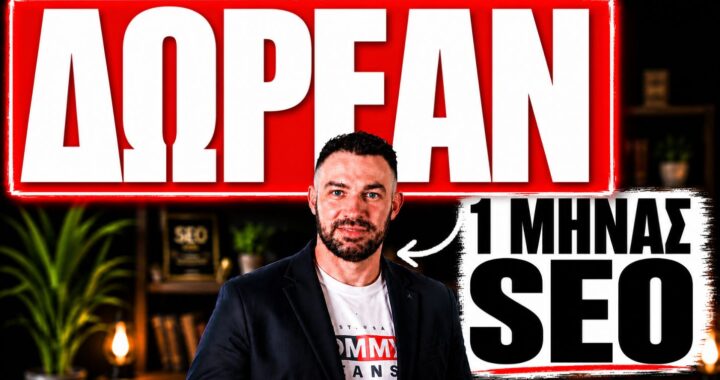 1 Μήνας SEO Δωρεάν! Με την αγορά τρίμηνου πακέτου SEO!